some of you have asked How to Choose Best Toys that grow with your child.
Children grow quickly, and so do their interests, abilities, and ways of playing. A toy that keeps a toddler excited today may become too simple a few months later. For parents, this can make choosing toys a little challenging—especially when you want to buy toys that provide lasting value.
Instead of choosing toys that are useful for only one stage of childhood, parents can look for toys that grow with their child. These are toys that can be used in different ways as children develop new skills, discover new interests, and become more independent.
The right toy doesn’t always need to be complicated or expensive. Sometimes, a simple set of building blocks, pretend-play accessories, puzzles, or creative materials can provide years of different play experiences.
In this guide, we’ll explore how to choose toys that grow with your child and what parents should look for when building a meaningful toy collection.
What Does It Mean for a Toy to “Grow” With a Child?
A toy that grows with a child is one that remains interesting and useful as the child develops.
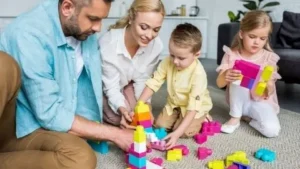
For example, a child might first use building blocks simply to stack them. As their skills improve, they may begin creating houses, vehicles, towers, or imaginary cities.
The same toy provides a different experience at different ages.
These toys are often:
- Open-ended
- Adaptable
- Creative
- Skill-building
- Suitable for multiple types of play
- Easy to combine with other toys
The goal isn’t necessarily to find one toy that works perfectly from infancy to the teenage years. Instead, look for toys that remain useful for longer and offer new challenges as your child grows.
How to Choose Best Toys 1. Choose Open-Ended Toys
One of the best ways to choose long-lasting toys is to look for open-ended toys.
Open-ended toys don’t have only one correct way to play. Children can use them in many different ways depending on their age and imagination.
Examples include:
- Building blocks
- Construction sets
- Play dough
- Art supplies
- Dolls
- Action figures
- Pretend-play accessories
- Magnetic building toys
A younger child may use blocks for stacking, while an older child might use them to create detailed structures.
Because there isn’t a fixed way to play, these toys can continue to provide new experiences.
2. Look for Toys That Encourage Creativity
Creative toys can change as a child’s abilities develop.
Consider a simple drawing kit. A young child may start by experimenting with colors and basic shapes. Later, they may create characters, scenes, comics, or detailed artwork.
Similarly, modeling clay can be used for simple shapes at first and more detailed creations later.
Creative toys can include:
- Coloring sets
- Drawing kits
- Craft kits
- Modeling clay
- DIY activity sets
- Building materials
- Musical toys
The more freedom children have to create, the more possibilities the toy can offer.
3. Choose Toys With Different Levels of Challenge
A toy that is too easy may quickly become boring, while one that is too difficult may frustrate a child.
Look for toys that allow children to gradually increase the level of challenge.
Puzzles are a good example. A child can begin with simple puzzles containing large pieces and later move to puzzles with more pieces and complex designs.
Similarly, building sets can become more challenging as children learn to follow instructions and create more detailed structures.
When shopping, ask yourself:
“Can my child do more with this toy as their skills improve?”
If the answer is yes, it may be a good long-term choice.
4. Consider Building and Construction Toys
Building toys are among the most versatile options for growing children.
At an early stage, children can practice:
- Stacking
- Sorting
- Connecting
- Matching colors and shapes
As they grow, they can begin creating:
- Houses
- Bridges
- Vehicles
- Towers
- Cities
- Imaginary worlds
Construction toys can support creativity, hand-eye coordination, spatial thinking, and problem-solving.
Parents can also introduce new challenges over time. For example, ask your child to build something that can hold a toy or create a bridge between two objects.
5. Invest in Pretend-Play Toys
Pretend play changes dramatically as children grow.
A toddler may simply pretend to cook with a toy kitchen. A preschooler might turn the same kitchen into a restaurant, complete with menus, customers, and pretend money.
Similarly, a doctor set can become part of increasingly detailed role-play stories.
Popular pretend-play options include:
- Kitchen sets
- Doctor kits
- Tool sets
- Doll sets
- Shopping sets
- Beauty kits
- Superhero sets
These toys can grow with children’s imagination and storytelling abilities.
6. Choose Toys That Encourage Social Play
As children grow, playing with parents, siblings, friends, and other children becomes increasingly important.
Board games, card games, cooperative activities, and group-friendly toys can encourage children to communicate and interact with others.
Social play can help children practice:
- Taking turns
- Sharing
- Following rules
- Communicating
- Teamwork
- Decision-making
A simple game can also become more challenging as children learn strategies and understand rules better.
7. Don’t Ignore Educational Toys
Educational toys can provide different learning experiences at different ages.
For example, a counting toy may initially help a child recognize numbers. Later, the same type of activity can be used for simple addition or counting challenges.
Similarly, alphabet toys can progress from letter recognition to spelling simple words.
Good educational toys should make learning feel like play rather than a classroom lesson.
Consider toys related to:
- Numbers
- Letters
- Shapes
- Colors
- Science
- Logic
- Memory
- Problem-solving
- STEM activities
8. Choose Toys That Can Be Combined
Another useful strategy is to select toys that work well with other toys.
For example, building blocks can be combined with toy cars, dolls, animals, or action figures to create larger imaginary worlds.
A dollhouse can become a setting for storytelling, while construction pieces can be used to build additional furniture or structures.
Toys that can interact with other toys often provide more possibilities and help children expand their creativity.
9. Prioritize Quality and Durability
If you want a toy to grow with your child, durability matters.
Look for toys made from materials appropriate for their intended use and age. Check whether pieces feel sturdy and whether the toy is designed to withstand regular play.
Before purchasing, consider:
- Is the toy well constructed?
- Are the pieces durable?
- Can individual parts be replaced?
- Is it easy to clean?
- Does it have an appropriate age recommendation?
A durable toy can remain part of a child’s play collection for much longer.
10. Choose Based on Your Child, Not Just Their Age
Age recommendations are useful, but every child develops differently.
Two children of the same age may have completely different interests. One may love puzzles, while another may prefer pretend play or building activities.
Pay attention to what your child naturally enjoys.
Ask yourself:
What activities keep my child curious?
What does my child enjoy creating?
What skills are they currently developing?
What kind of play do they return to repeatedly?
Choosing toys based on your child’s interests can make them more likely to use and enjoy the toy for a longer period.
Safety Should Always Come First
No matter how versatile a toy is, safety should always be the first consideration.
Always check the recommended age range and read the manufacturer’s safety instructions. For younger children, avoid toys with small parts that may create a choking risk.
Parents should also regularly inspect toys for broken, loose, or damaged components.
A toy that grows with your child should grow safely with them.
How to Get More Use From the Toys You Already Have
You don’t always need to buy new toys to create new experiences.
Try changing the way familiar toys are used.
For example:
- Turn blocks into a building challenge.
- Create a story around dolls or action figures.
- Use puzzles as timed challenges when age-appropriate.
- Combine toy cars with blocks to create a city.
- Turn a kitchen set into a pretend restaurant.
- Use art supplies to create handmade decorations.
Sometimes, a new idea can make an old toy feel completely new.
Final Thoughts
Choosing toys that grow with your child is about looking beyond the excitement of the first few days. The best long-lasting toys are often those that encourage creativity, imagination, problem-solving, and different ways of playing.
Open-ended toys, building sets, puzzles, pretend-play toys, creative kits, educational games, and social activities can continue to provide value as children develop new skills.
Instead of asking only, “Will my child like this toy today?”, consider asking:
Frequently Asked Questions
1. What are toys that grow with a child?
Toys that grow with a child are versatile toys that remain useful and interesting as children develop new skills and interests. Building blocks, puzzles, pretend-play sets, art supplies, and construction toys are good examples because they can be used in different ways at different stages.
2. What should I look for when choosing toys that grow with my child?
Look for toys that are open-ended, durable, creative, adaptable, and suitable for different levels of ability. Toys that encourage problem-solving, imagination, creativity, and independent play can provide value for a longer period.
3. Are educational toys good for different age groups?
Yes, many educational toys can offer different learning experiences as children grow. For example, counting toys can first help children recognize numbers and later be used for simple counting or math activities. Always choose toys according to the child’s age, abilities, and the manufacturer’s recommendations.
4. How can I make old toys interesting again?
You can introduce new ways to play with familiar toys. Try creating building challenges with blocks, making stories with dolls or action figures, setting up a pretend shop or restaurant, or combining different toys to create imaginary worlds. Changing the activity can give children a fresh and creative way to enjoy toys they already have.