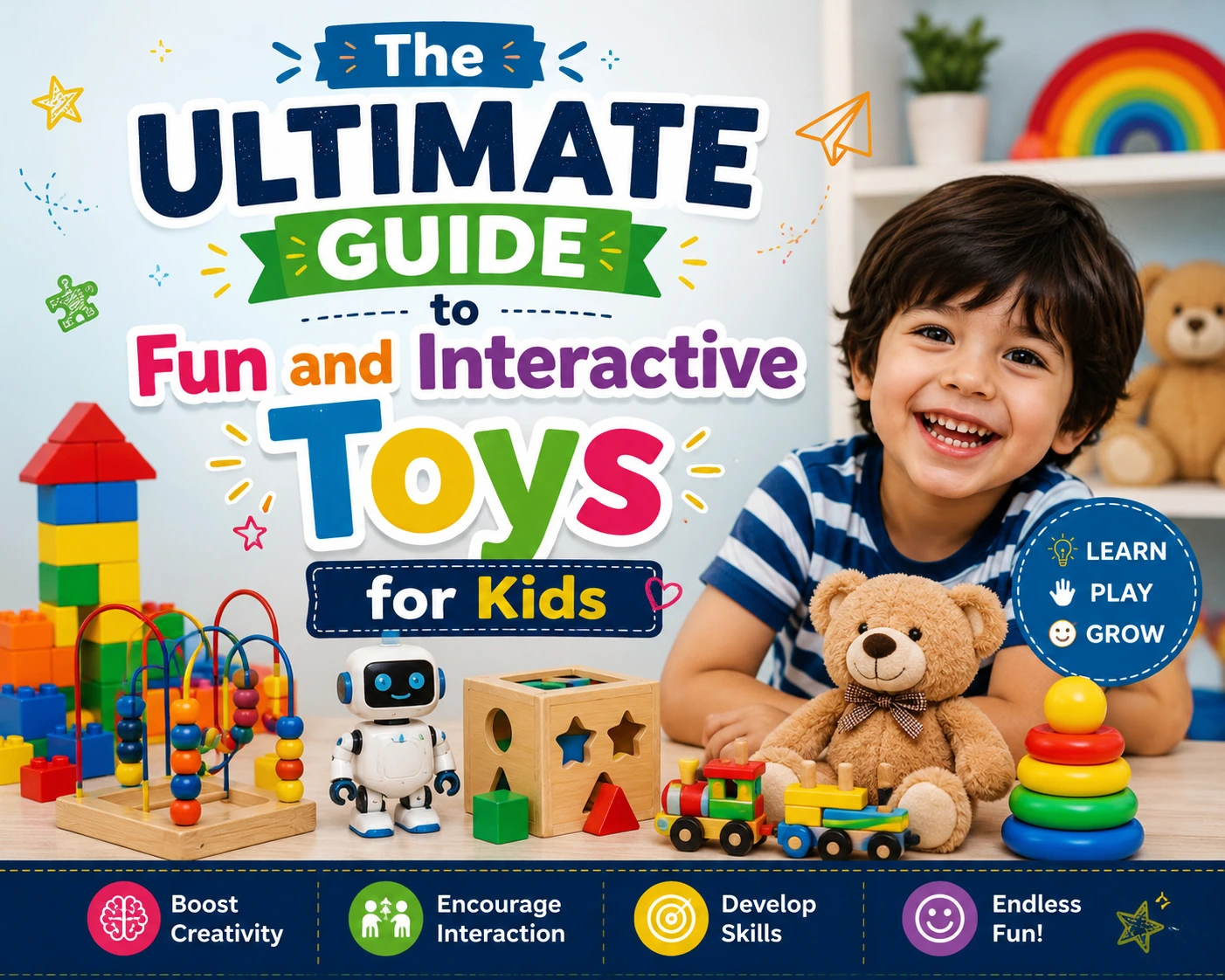
Children learn best when they are having fun, exploring new ideas, and using their imagination. That’s why fun and interactive toys are more than just a source of entertainment. They can help children develop creativity, communication, problem-solving abilities, motor skills, and confidence while keeping them engaged.
With so many toys available today, choosing the right one can sometimes feel overwhelming. This ultimate guide will help parents understand different types of interactive toys and how they can make playtime more exciting and meaningful.
What Are Interactive Toys?
Interactive toys are designed to encourage children to actively participate in play rather than simply watching or observing. These toys may involve movement, sounds, puzzles, building, storytelling, role-play, or problem-solving.
Examples include:
- Building blocks and construction sets
- Musical toys
- Puzzles and brain games
- Board and card games
- Pretend-play sets
- Educational electronic toys
- Art and craft kits
- Remote-control toys
- Activity and sensory toys
The best interactive toys encourage children to explore and discover things on their own.
1. Building Toys for Little Creators
Building blocks and construction toys give children the freedom to create almost anything they can imagine. They can build houses, towers, vehicles, animals, or completely new creations.
While building, children can develop creativity, hand-eye coordination, concentration, and problem-solving skills.
The best part? There is no single correct way to play. Every creation can be different.
2. Puzzles for Problem-Solving Fun
Puzzles are a simple but powerful way to make learning enjoyable. From colorful jigsaw puzzles to matching and shape puzzles, children can improve their ability to recognize patterns and think logically.
Start with simple puzzles for younger children and gradually introduce more challenging ones as their skills develop.
3. Pretend-Play Toys for Imagination
Pretend play allows children to create their own little worlds. A doctor set can turn a child into a doctor, while a kitchen set can inspire them to become a chef.
Pretend-play toys can help children develop:
- Communication skills
- Social interaction
- Creativity
- Imagination
- Confidence
- Understanding of everyday activities
Sometimes, an ordinary toy can inspire an extraordinary imaginary adventure.
4. Musical Toys for Creative Expression
Musical toys such as toy keyboards, xylophones, drums, and microphones introduce children to sounds and rhythm.
Encourage children to create their own songs, experiment with different sounds, or dance along to the music. Musical play can make children more comfortable with creative expression and rhythm.
And don’t worry if their first concert sounds a little noisy—it’s all part of the fun!
5. Educational Toys That Make Learning Fun
Educational toys can introduce important concepts without making children feel like they are studying.
Number games can encourage counting, alphabet toys can support early language learning, and science-based activity kits can encourage curiosity.
When children learn through hands-on activities, concepts can become easier to understand and remember.
6. Board Games for Family Fun
Board games are perfect for bringing children and parents together. They can teach children about taking turns, following rules, making decisions, and accepting both winning and losing.
Different games can also encourage skills such as counting, memory, strategy, and communication.
Most importantly, board games create opportunities for quality family time.
7. Art and Craft Toys for Creative Minds
Art kits, coloring sets, clay, drawing boards, and craft activities allow children to turn their ideas into something they can see and touch.
Creative activities can help children improve their fine motor skills while giving them the freedom to experiment with colors, shapes, and designs.
Don’t focus too much on making the final result perfect. Let children enjoy the creative process.
8. Remote-Control Toys for Active Play
Remote-control cars, helicopters, and other interactive vehicles can make playtime exciting. Children can learn how controls work while improving coordination and concentration.
Parents can even create simple obstacle courses using household objects and turn playtime into a fun challenge.
9. Choose Toys According to Age
One of the most important things to consider when buying a toy is whether it is appropriate for the child’s age and development level.
For Babies and Toddlers
Look for toys that encourage:
- Grasping and movement
- Colors and shapes
- Basic sounds
- Sensory exploration
For Preschoolers
Choose toys that encourage:
- Imagination
- Pretend play
- Counting
- Matching
- Creativity
- Basic problem-solving
For School-Age Children
Consider:
- Strategy games
- Construction sets
- Advanced puzzles
- Science kits
- Creative activity sets
- Educational games
Always check the manufacturer’s recommended age range and safety information before purchasing.
10. Look for Toys That Encourage Open-Ended Play
Open-ended toys can be used in many different ways. Building blocks, art supplies, dolls, action figures, and pretend-play sets are good examples.
Instead of telling children exactly how to use the toy, give them the freedom to decide.
Ask questions like:
“What can you build?”
“What story can you create?”
“What do you think will happen next?”
These simple questions can turn ordinary play into an imaginative learning experience.
How Parents Can Make Toys More Interactive
Parents don’t need to buy dozens of toys to make playtime exciting. A little involvement can make a big difference.
Try:
- Playing together
- Creating simple challenges
- Asking questions
- Encouraging storytelling
- Mixing different toys together
- Allowing children to experiment
- Celebrating their creative ideas
For example, blocks can become a city, toy cars can become part of a racing game, and dolls can become characters in a story.
Safety Should Always Come First
Fun is important, but safety is essential. Before choosing a toy, check that it is suitable for your child’s age and development level.
Look for:
- Durable construction
- Non-toxic materials where applicable
- Securely attached parts
- Appropriate size for younger children
- Clear age recommendations
- Reliable safety information
Younger children should also be supervised when playing with toys that contain small parts or require batteries or electronic components.
Final Thoughts
The best toys aren’t necessarily the biggest, most expensive, or most technologically advanced. A great toy is one that encourages children to play actively, think creatively, explore confidently, and enjoy the learning process.
From puzzles and building blocks to pretend-play sets and musical toys, every type of toy can offer a unique opportunity for growth.
So, the next time you’re choosing a toy, don’t just ask, “Will my child enjoy it?” Ask:
“What can my child discover, create, or learn while playing with it?”
Because when play becomes interactive, every toy can become a new adventure—and every adventure can become a learning experience.