Fun Toys to Improve Problem
Fun Toys To improve problem in Children. They love asking questions, trying new things, figuring out how objects work, and discovering what happens when they try something different. This natural curiosity is an important part of learning—and problem-solving skills help children turn curiosity into discovery.
Problem-solving isn’t something children learn only from books or classrooms. Everyday play can provide opportunities to think, experiment, make decisions, and find solutions. The right toys can make this learning process enjoyable because children are learning while having fun.
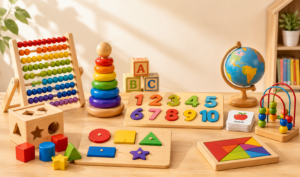
From puzzles and building blocks to board games and STEM activity kits, there are many fun toys that can help improve problem-solving skills in children.
Let’s explore some of the best options parents can introduce into their child’s playtime.
Why Are Problem-Solving Skills Important for Children?
Problem-solving is the ability to understand a challenge, think about possible solutions, try different approaches, and learn from the result.
Children use problem-solving skills in many everyday situations, such as completing a puzzle, building a tower, figuring out how to assemble a toy, or deciding how to move a game piece.
Developing these skills can encourage children to:
- Think logically
- Make decisions
- Develop patience
- Understand cause and effect
- Experiment with different solutions
- Learn from mistakes
- Improve concentration
- Become more independent
The goal isn’t always to find the correct answer immediately. Trying, making mistakes, and trying again are important parts of learning.
Fun Toys to Improve Problem like 1. Jigsaw Puzzles
Jigsaw puzzles are one of the simplest and most enjoyable ways to encourage problem-solving.
Children need to look at shapes, colors, patterns, and images to determine where each piece belongs. They may need to try several pieces before finding the correct match.
Puzzles can encourage:
- Logical thinking
- Visual recognition
- Concentration
- Patience
- Memory
- Attention to detail
Start with puzzles that match your child’s age and ability. Younger children can begin with large, simple pieces, while older children can gradually move to puzzles with more pieces and complex images.
2. Building Blocks
Building blocks give children the freedom to create while solving small problems along the way.
For example, a child building a tower may discover that it keeps falling over. They then have to think: Should the base be wider? Should they use different pieces? Should they make the tower shorter?
These simple decisions introduce children to concepts such as balance, structure, planning, and cause and effect.
Parents can make building play even more interesting by giving children challenges such as:
“Can you build a bridge for this toy car?”
“Can you build the tallest tower you can?”
“Can you make a house for your toy animal?”
There can be many possible solutions, making building toys excellent for creative thinking.
3. Shape Sorters and Matching Toys
Shape sorters are especially useful for younger children.
Children need to identify different shapes and determine which opening matches each piece. This encourages them to observe, compare, and make decisions.
Matching toys can also help children recognize:
- Colors
- Shapes
- Patterns
- Pictures
- Numbers
- Objects
These activities provide simple challenges that encourage children to think before acting.
4. Maze and Labyrinth Toys
Maze toys turn problem-solving into an exciting adventure.
Children need to find a path from one point to another while avoiding obstacles or dead ends. They may try one route, discover that it doesn’t work, and then try another.
This encourages children to plan, remember previous attempts, and adjust their approach.
Mazes are available in many forms, including puzzle books, tabletop games, magnetic maze toys, and digital-free activity sets.
5. Board Games
Board games can provide a combination of problem-solving, strategy, and social interaction.
Depending on the game, children may need to plan their next move, remember rules, make decisions, or think several steps ahead.
Board games can also introduce important social skills such as:
- Taking turns
- Following rules
- Communicating
- Making decisions
- Managing disappointment
- Cooperating with others
Choose games according to your child’s age and gradually introduce more challenging games as their skills develop.
6. STEM and Science Toys
STEM toys can turn curiosity into hands-on exploration.
Science, technology, engineering, and mathematics-based toys often encourage children to build, test, observe, and modify their ideas.
Examples include:
- Simple experiment kits
- Building sets
- Engineering toys
- Circuit-based activity kits
- Coding toys
- Construction sets
- Science discovery kits
For example, if a child builds a structure that doesn’t work, they can experiment with changing its design.
This process teaches an important lesson: failure can be part of finding a solution.
7. Construction and Assembly Toys
Construction toys require children to think about how different pieces fit together.
Whether they are building a vehicle, animal, structure, or imaginary creation, children often need to follow steps, recognize patterns, and make adjustments.
Construction play can support:
- Planning
- Spatial awareness
- Fine motor skills
- Logical thinking
- Creativity
- Attention to detail
For younger children, choose larger and simpler construction pieces. Older children can explore more detailed building sets.
8. Memory Games
Memory games may look simple, but they can encourage children to observe carefully and remember information.
A traditional matching game requires players to remember where different cards are located. Children need to pay attention to previous turns and use that information when making their next move.
Memory activities can support:
- Concentration
- Recall
- Observation
- Decision-making
- Pattern recognition
They are also easy to play with parents and siblings, making them a fun family activity.
9. Tangram and Shape Puzzles
Tangrams and similar shape puzzles encourage children to create pictures or objects using a limited number of geometric pieces.
The challenge is figuring out how the shapes can be rotated, moved, and combined to create a desired design.
These toys can encourage spatial reasoning, creativity, visual thinking, and planning.
If your child enjoys shapes and building, tangram-style puzzles can provide a fun new challenge.
10. Pretend-Play Toys
Problem-solving doesn’t always need to involve traditional puzzles.
Pretend play can also involve plenty of decision-making and creative thinking.
For example, when playing with a toy kitchen, children may decide what to “cook,” what ingredients they need, and how to serve their pretend customers.
A doctor set might inspire children to create a situation where a toy patient needs help.
Pretend play encourages children to create scenarios, identify problems, and invent solutions using their imagination.
How Parents Can Encourage Problem-Solving Through Play
The toy itself is only part of the experience. Parents can make play more meaningful by giving children enough freedom to solve problems independently.
Instead of immediately providing the answer, try asking questions such as:
“What do you think we should try?”
“Why do you think that happened?”
“What could you change?”
“Can you think of another way?”
These questions encourage children to think instead of simply waiting for instructions.
It’s also important to allow children to make mistakes. If a block tower falls down or a puzzle piece doesn’t fit, let them experiment before stepping in.
Choose Toys According to Age and Ability
Not every problem-solving toy is suitable for every child.
A puzzle that is too easy may not provide enough challenge, while a toy that is too difficult can lead to frustration.
When choosing toys, consider:
- Your child’s age
- Current abilities
- Interests
- Attention span
- Recommended age range
- Safety requirements
The ideal toy should provide a manageable challenge with room for learning and improvement.
Final Thoughts
Problem-solving is an important skill that children use throughout childhood and beyond. Fortunately, developing this skill doesn’t have to feel like studying.
Fun toys can turn everyday play into opportunities to think, experiment, create, and discover.
Puzzles, building blocks, board games, mazes, STEM toys, memory games, construction sets, and pretend-play toys can all provide different kinds of challenges.
Most importantly, give children the freedom to explore. Let them make mistakes, try new ideas, and discover solutions in their own way.
At Kidsplore, we believe play is one of the most enjoyable ways for children to discover the world. With the right toys, every challenge can become a new adventure to Play • Learn • Explore.
Children are naturally curious. They love asking questions, trying new things, figuring out how objects work, and discovering what happens when they try something different. This natural curiosity is an important part of learning—and problem-solving skills help children turn curiosity into discovery.
Problem-solving isn’t something children learn only from books or classrooms. Everyday play can provide opportunities to think, experiment, make decisions, and find solutions. The right toys can make this learning process enjoyable because children are learning while having fun.
From puzzles and building blocks to board games and STEM activity kits, there are many fun toys that can help improve problem-solving skills in children.
Let’s explore some of the best options parents can introduce into their child’s playtime.
Why Are Problem-Solving Skills Important for Children?
Problem-solving is the ability to understand a challenge, think about possible solutions, try different approaches, and learn from the result.
Children use problem-solving skills in many everyday situations, such as completing a puzzle, building a tower, figuring out how to assemble a toy, or deciding how to move a game piece.
Developing these skills can encourage children to:
- Think logically
- Make decisions
- Develop patience
- Understand cause and effect
- Experiment with different solutions
- Learn from mistakes
- Improve concentration
- Become more independent
The goal isn’t always to find the correct answer immediately. Trying, making mistakes, and trying again are important parts of learning.
1. Jigsaw Puzzles
Jigsaw puzzles are one of the simplest and most enjoyable ways to encourage problem-solving.
Children need to look at shapes, colors, patterns, and images to determine where each piece belongs. They may need to try several pieces before finding the correct match.
Puzzles can encourage:
- Logical thinking
- Visual recognition
- Concentration
- Patience
- Memory
- Attention to detail
Start with puzzles that match your child’s age and ability. Younger children can begin with large, simple pieces, while older children can gradually move to puzzles with more pieces and complex images.
2. Building Blocks
Building blocks give children the freedom to create while solving small problems along the way.
For example, a child building a tower may discover that it keeps falling over. They then have to think: Should the base be wider? Should they use different pieces? Should they make the tower shorter?
These simple decisions introduce children to concepts such as balance, structure, planning, and cause and effect.
Parents can make building play even more interesting by giving children challenges such as:
“Can you build a bridge for this toy car?”
“Can you build the tallest tower you can?”
“Can you make a house for your toy animal?”
There can be many possible solutions, making building toys excellent for creative thinking.
3. Shape Sorters and Matching Toys
Shape sorters are especially useful for younger children.
Children need to identify different shapes and determine which opening matches each piece. This encourages them to observe, compare, and make decisions.
Matching toys can also help children recognize:
- Colors
- Shapes
- Patterns
- Pictures
- Numbers
- Objects
These activities provide simple challenges that encourage children to think before acting.
4. Maze and Labyrinth Toys
Maze toys turn problem-solving into an exciting adventure.
Children need to find a path from one point to another while avoiding obstacles or dead ends. They may try one route, discover that it doesn’t work, and then try another.
This encourages children to plan, remember previous attempts, and adjust their approach.
Mazes are available in many forms, including puzzle books, tabletop games, magnetic maze toys, and digital-free activity sets.
5. Board Games
Board games can provide a combination of problem-solving, strategy, and social interaction.
Depending on the game, children may need to plan their next move, remember rules, make decisions, or think several steps ahead.
Board games can also introduce important social skills such as:
- Taking turns
- Following rules
- Communicating
- Making decisions
- Managing disappointment
- Cooperating with others
Choose games according to your child’s age and gradually introduce more challenging games as their skills develop.
6. STEM and Science Toys
STEM toys can turn curiosity into hands-on exploration.
Science, technology, engineering, and mathematics-based toys often encourage children to build, test, observe, and modify their ideas.
Examples include:
- Simple experiment kits
- Building sets
- Engineering toys
- Circuit-based activity kits
- Coding toys
- Construction sets
- Science discovery kits
For example, if a child builds a structure that doesn’t work, they can experiment with changing its design.
This process teaches an important lesson: failure can be part of finding a solution.
7. Construction and Assembly Toys
Construction toys require children to think about how different pieces fit together.
Whether they are building a vehicle, animal, structure, or imaginary creation, children often need to follow steps, recognize patterns, and make adjustments.
Construction play can support:
- Planning
- Spatial awareness
- Fine motor skills
- Logical thinking
- Creativity
- Attention to detail
For younger children, choose larger and simpler construction pieces. Older children can explore more detailed building sets.
8. Memory Games
Memory games may look simple, but they can encourage children to observe carefully and remember information.
A traditional matching game requires players to remember where different cards are located. Children need to pay attention to previous turns and use that information when making their next move.
Memory activities can support:
- Concentration
- Recall
- Observation
- Decision-making
- Pattern recognition
They are also easy to play with parents and siblings, making them a fun family activity.
9. Tangram and Shape Puzzles
Tangrams and similar shape puzzles encourage children to create pictures or objects using a limited number of geometric pieces.
The challenge is figuring out how the shapes can be rotated, moved, and combined to create a desired design.
These toys can encourage spatial reasoning, creativity, visual thinking, and planning.
If your child enjoys shapes and building, tangram-style puzzles can provide a fun new challenge.
10. Pretend-Play Toys
Problem-solving doesn’t always need to involve traditional puzzles.
Pretend play can also involve plenty of decision-making and creative thinking.
For example, when playing with a toy kitchen, children may decide what to “cook,” what ingredients they need, and how to serve their pretend customers.
A doctor set might inspire children to create a situation where a toy patient needs help.
Pretend play encourages children to create scenarios, identify problems, and invent solutions using their imagination.
How Parents Can Encourage Problem-Solving Through Play
The toy itself is only part of the experience. Parents can make play more meaningful by giving children enough freedom to solve problems independently.
Instead of immediately providing the answer, try asking questions such as:
“What do you think we should try?”
“Why do you think that happened?”
“What could you change?”
“Can you think of another way?”
These questions encourage children to think instead of simply waiting for instructions.
It’s also important to allow children to make mistakes. If a block tower falls down or a puzzle piece doesn’t fit, let them experiment before stepping in.
Choose Toys According to Age and Ability
Not every problem-solving toy is suitable for every child.
A puzzle that is too easy may not provide enough challenge, while a toy that is too difficult can lead to frustration.
When choosing toys, consider:
- Your child’s age
- Current abilities
- Interests
- Attention span
- Recommended age range
- Safety requirements
The ideal toy should provide a manageable challenge with room for learning and improvement.
Final Thoughts
Problem-solving is an important skill that children use throughout childhood and beyond. Fortunately, developing this skill doesn’t have to feel like studying.
Fun toys can turn everyday play into opportunities to think, experiment, create, and discover.
Puzzles, building blocks, board games, mazes, STEM toys, memory games, construction sets, and pretend-play toys can all provide different kinds of challenges.
Most importantly, give children the freedom to explore. Let them make mistakes, try new ideas, and discover solutions in their own way.
At Kidsplore, we believe play is one of the most enjoyable ways for children to discover the world. With the right toys, every challenge can become a new adventure to Play • Learn • Explore.