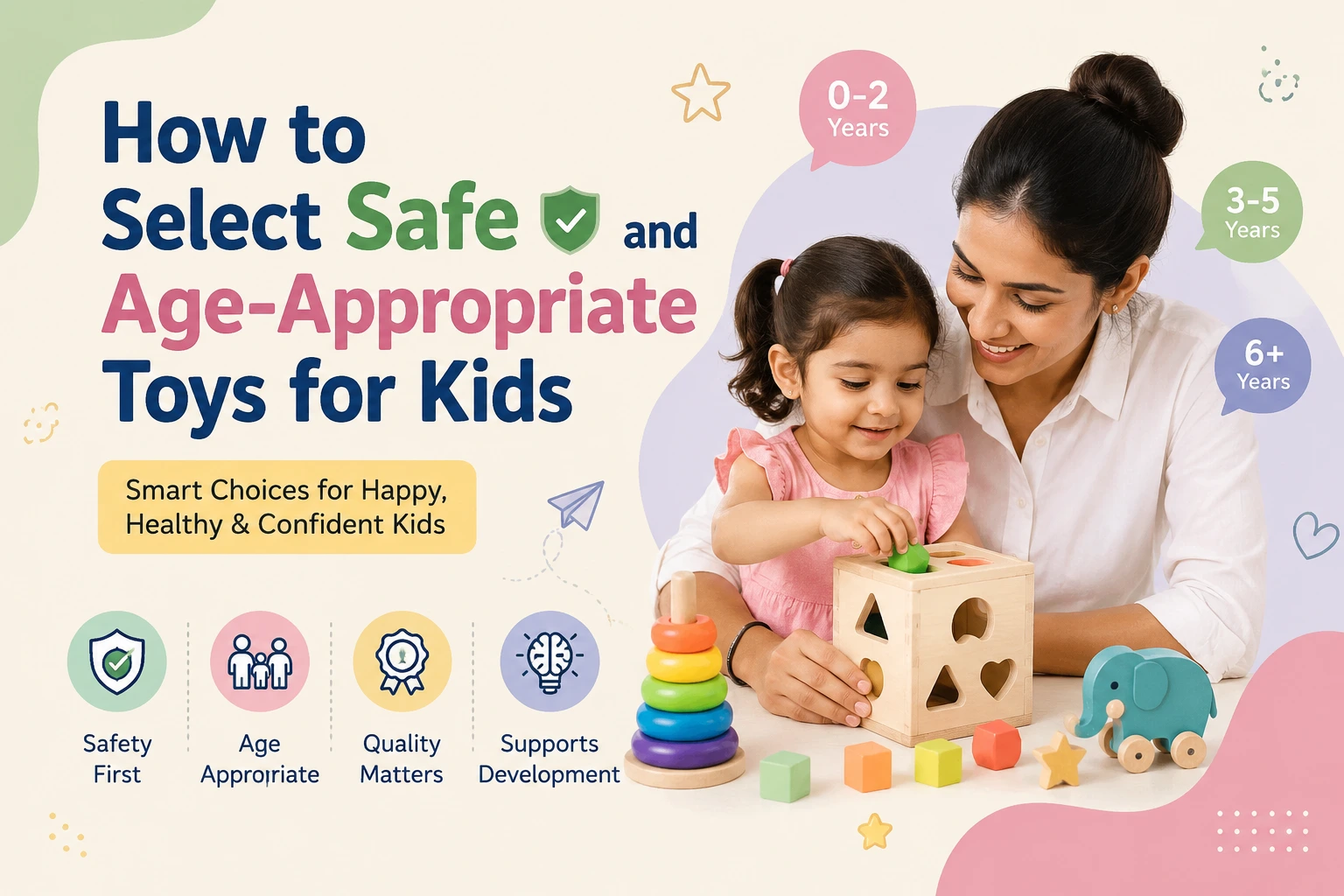
Choosing a toy for a child can be exciting, but with so many options available, parents may wonder which toys are truly suitable for their little ones. A good toy should not only be fun and engaging but also match the child’s age, abilities, interests, and developmental stage.
The right toy can encourage creativity, learning, movement, and social interaction. At the same time, choosing an age-appropriate and safe toy helps create a better play experience for children.
Why Is Choosing the Right Toy Important?
Children at different ages have different abilities and needs. A toy that is perfect for a 5-year-old may not be suitable for a toddler.
For younger children, safety and simplicity are especially important. As children grow, toys can become more challenging and can encourage skills such as problem-solving, creativity, coordination, and logical thinking.
Choosing the right toy means finding a balance between fun, safety, learning, and age suitability.
1. Check the Recommended Age
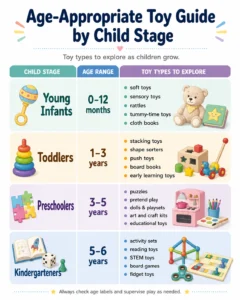
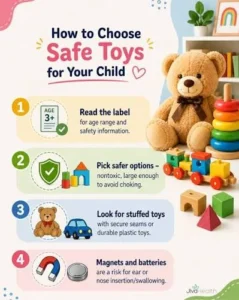
One of the first things parents should look at when buying a toy is the recommended age range.
Toy manufacturers generally provide age guidance based on factors such as:
- Size and complexity of the toy
- Child’s developmental abilities
- Possible safety risks
- Required coordination and understanding
- Level of difficulty
For example, a simple stacking toy may be suitable for a toddler, while a complex construction set may be more appropriate for an older child.
Age recommendations are useful guidelines, but parents should also consider their individual child’s abilities.
2. Look for Small Parts Warnings
Small parts can create a choking risk for young children who may naturally put objects in their mouths.
Parents should carefully check toys for:
- Small detachable pieces
- Tiny accessories
- Loose components
- Small batteries
- Small decorative parts
For babies and toddlers, choose toys designed specifically for their age and avoid toys with parts that can easily come loose.
3. Choose Strong and Durable Toys
Children can be enthusiastic when playing, so toys should be able to handle regular use.
Before purchasing, check whether the toy appears:
- Well constructed
- Free from sharp edges
- Free from cracks or broken parts
- Securely assembled
- Suitable for normal child use
A durable toy can provide a safer and more enjoyable experience while also lasting longer.
4. Check the Materials
Pay attention to the materials used to make the toy, especially when buying toys for younger children.
Look for products made with child-friendly materials and avoid toys with strong chemical smells, peeling surfaces, or easily removable coatings.
For toys that children may put in their mouths, such as teethers or infant toys, parents should be particularly careful to choose products specifically designed for that purpose.
5. Be Careful With Batteries and Magnets
Some toys contain batteries or magnets that require extra attention.
Battery compartments should be secure and difficult for young children to open. Parents should also regularly inspect battery-powered toys for damage or loose components.
Small high-powered magnets can be dangerous if swallowed, so toys containing magnets should be selected and used according to their age recommendations and safety instructions.
6. Consider Your Child’s Developmental Stage
A toy should provide an appropriate level of challenge.
If a toy is too difficult, a child may quickly become frustrated. If it is too simple, they may lose interest.
For younger children, consider toys that encourage:
- Grasping and coordination
- Basic shapes and colors
- Simple sounds
- Stacking and sorting
- Early problem-solving
For older children, consider toys that encourage:
- Creativity
- Logical thinking
- Construction
- Strategy
- Reading and language
- Social interaction
The goal is to choose toys that are challenging enough to encourage learning while still being enjoyable.
7. Choose Toys That Encourage Active Play
Children benefit from moving their bodies. Whenever possible, include toys that encourage physical activity.
Balls, ride-on toys, building activities, outdoor games, and movement-based toys can encourage children to stay active while having fun.
For outdoor toys, parents should also consider the child’s environment and supervise play when necessary.
8. Look for Educational Value
Educational toys can turn playtime into a learning experience.
Puzzles can encourage problem-solving, building blocks can support creativity and coordination, and matching or counting games can introduce early learning concepts.
However, educational value does not mean a toy has to feel like school. The best learning toys allow children to explore and discover while having fun.
9. Think About Your Child’s Interests
Safety and age suitability are important, but don’t forget what your child actually enjoys.
Does your child love music? Try musical toys.
Do they enjoy building? Consider construction sets.
Are they interested in pretend play? Doctor sets, kitchen sets, dolls, or role-play toys may be a great choice.
When children are interested in a toy, they are more likely to spend time exploring it and developing new skills.
10. Read the Instructions and Safety Information
Always read the manufacturer’s instructions and safety warnings before giving a toy to a child.
Pay attention to:
- Recommended age
- Safety warnings
- Assembly instructions
- Battery information
- Cleaning instructions
- Proper usage
- Supervision requirements
Following these instructions can help parents use the toy as intended.
11. Inspect Toys Regularly
Buying a safe toy is only the first step. Toys can become damaged after repeated use.
Parents should regularly check for:
- Broken pieces
- Sharp edges
- Loose parts
- Damaged cords
- Cracked plastic
- Exposed batteries
- Peeling surfaces
If a toy becomes damaged or unsafe, it should be repaired or removed from the child’s play area.
A Simple Toy-Selection Checklist
Before buying a toy, ask yourself:
Is it safe?
Does it have any sharp edges, loose parts, or other obvious hazards?
Is it age-appropriate?
Does it match the child’s age and developmental abilities?
Is it engaging?
Will the child actually enjoy playing with it?
Does it encourage development?
Can it support creativity, coordination, problem-solving, communication, or physical activity?
Is it durable?
Can it handle regular play?
If the answer to these questions is yes, the toy may be a good choice.
Conclusion
Selecting the right toy is about more than choosing something colorful or entertaining. Parents should consider safety, age suitability, developmental value, quality, and the child’s interests before making a purchase.
A well-chosen toy can become more than just a plaything. It can encourage curiosity, creativity, confidence, and learning while giving children the freedom to enjoy their childhood.
At Kidsplore, we believe every child deserves toys that inspire them to Play, Learn, and Explore. With thoughtful toy choices and safe play environments, parents can make playtime both enjoyable and meaningful.
Choose wisely. Play safely. Let every toy become an opportunity to learn and grow.